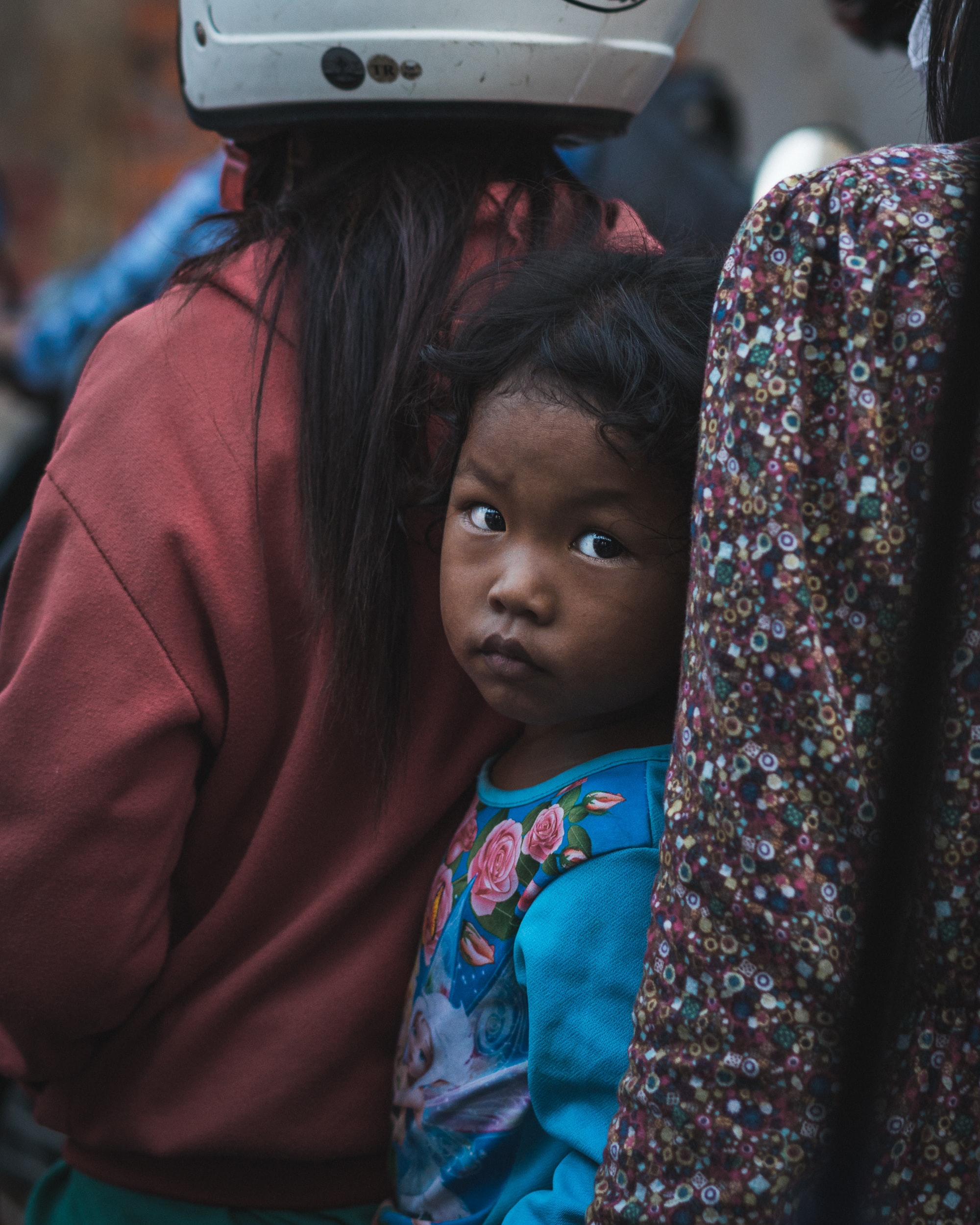
Fear to return to Cambodia?

Our Expert Immigration Lawyers are currently helping Cambodians to apply for PROTECTION VISA and PERMANENT RESIDENCE in Australia. But you must be quick. Things may change as we speak.

Fill in the form to see if you are eligible for a Cambodia Protection Visa

PROTECTION VISA FOR CAMBODIANS IN AUSTRALIA

The ruling Cambodian People’s Party has intensified its crackdown on independent media, local human rights defenders, and land rights activists. In April, Hun Sen used the Covid-19 pandemic to enact a draconian state of emergency law that severely restricts fundamental liberties.

Between January and April, authorities detained and interrogated at least 30 people, including a 14-year-old girl, for Facebook posts.

On 4 June, Wanchalearm Satsaksit, a 37-year-old Thai opposition activist living in exile in Cambodia, was abducted by unidentified persons in the capital, Phnom Penh. His whereabouts remained unknown.

Rights to free expression and peaceful assembly are sharply curtailed, and there is no accountability for serious abuses.

That’s why many Cambodians currently in Australia are applying for Protection Visa to stay permanently in Australia. 

Top Protection Claims from Cambodia:

  • Government Opposition
  • LGBTI persons
  • Beatings and other forms of physical mistreatment of police detainees and prison inmates
  • Attacks on Human Rights Defenders
  • Arbitrary Arrest or Detention
  • Denial of Fair Public Trial
Law Council of Australia
Best Immigration Law Firm

ONSHORE PROTECTION VISA – SUBCLASS 866

Our Immigration Lawyers can help you with your Onshore Protection Visa. Most of our protection visa clients are international students and tourists who fear to return to Cambodia and would like to stay in Australia permanently. We have a proven success record in assisting nationals of Cambodia.

ABOUT SUBCLASS 866 VISA

On 28 July 1951, the Refugee Convention was adopted by a United Nations Conference of Plenipotentiaries, in Geneva. Australia became a party (acceded) to the Convention on 22 January 1954. The Refugee Convention came into force on 21 April 1954.

Australia is a signatory to the 1951 Refugee Convention and the 1967 Protocol. This means that Australia has voluntarily committed to comply with their provisions in good faith and to take the necessary steps to give effect to those treaties under domestic law (Vienna Convention on the Law of Treaties, Article 26).

Under Article 33(1) of the Refugee Convention, Australia has an obligation not to:

“… expel or return (‘refouler’) a refugee in any manner whatsoever to the frontiers of territories where his life or freedom would be threatened on account of his race, religion, nationality, membership of a particular social group or political opinion”.

Claim your consultation

PROTECTION VISA REQUIREMENTS

To be a refugee in Australia, an asylum seeker must be assessed as meeting certain legal criteria. The meaning of a ‘refugee’ in the Migration Act 1958 (the Act) is a person in Australia who is:

  • outside their country of nationality or former habitual residence (their home country) and
  • owing to a ‘well-founded fear of persecution’, is unable or unwilling to return to their home country or to seek the protection of that country.

This definition is forward-looking. Even if a person has suffered persecution in the past, they are not a refugee by the meaning in the Act unless they have a well-founded fear of persecution and there is a real chance they will be persecuted in their home country now, if they were to return. However, past events could establish a real chance of persecution if the person were to return.

A person might become a refugee after arriving in Australia. This could occur if there is a change of circumstances in their home country or a change in personal circumstances after they left that gives them a well-founded fear of persecution if they were to return.

FEAR OF PERSECUTION

Well-founded fear of persecution The Act states that a person has a well-founded fear of persecution if:

  • they fear persecution for at least one of five reasons specified in the Act
  • there is a real chance that, if the person returns to their home country, they would be persecuted for one or more of those reasons
    the real chance of persecution relates to all areas of their home country
  • at least one of the five reasons must be the essential and significant reason for the persecution
  • the persecution involves both ‘serious harm’ to the person and ‘systematic and discriminatory conduct’.

THE FIVE REASONS

Section 5J(1)(a) of the Migration Act provides an exhaustive list of the five reasons for which a person may claim that a persecutor is motivated to inflict harm upon them. The five reasons are consistent with those in Article 1A(2) of the Refugees Convention. The reasons are:

  • Race
  • Religion
  • Nationality
  • Membership of a particular social group (PSG – family and non-family)
  • Political opinion.

COMPLEMENTARY PROTECTION REQUIREMENTS

Complementary protection is protection for those who are not refugees according to the Act, but who can’t return to their home country because they will suffer certain types of harm which engage Australia’s other protection obligations.

These obligations come from the Convention against Torture and Other Cruel, Inhuman or Degrading Treatment or Punishment (CAT) and the International Covenant on Civil and Political Rights (ICCPR) and have been incorporated into the Act.

A person can be granted a protection visa on the basis of complementary protection if there are substantial grounds for believing that there is a real risk the person will suffer ‘significant harm’ if they were removed from Australia to their home country.

The complimentary protection provisions enable visa applicants to claim protection on broader grounds than those contained in the Refugee Convention, reflecting Australia’s obligations under international human rights law.

International human rights law precludes countries from sending people back to places where they face a real risk of being arbitrarily deprived of their life, or a real risk of being tortured or exposed to other cruel, inhuman or degrading treatment or punishment.

MIGRATION ACT 1958 (CTH)

Section 36(2A) of the Migration Act 1958 (Cth) largely gives effect to those obligations in domestic law. People at risk of this kind of harm are eligible for a protection visa. In this way, human rights law provides a ‘complement’ to protection under the Refugee Convention, hence the name ‘complementary protection’.

Specifically, section 36(2A) provides that Australia is not permitted to remove people to countries where they face a real risk of one or more of the following:

  • arbitrary deprivation of life
  • the death penalty
  • torture
  • cruel or inhuman treatment or punishment
  • degrading treatment or punishment.

Complementary protection introduced greater efficiency, transparency and accountability into Australia’s protection regime. Prior to March 2012, Australia was unable to guarantee that people who did not meet the refugee definition in the Refugee Convention, but who nonetheless faced serious human rights abuses if returned to their country of origin or habitual residence, would be granted protection.

There are two types of particular social groups described in the Act. One provides criteria to be met if a person claims to have a well-founded fear of persecution because they are a member of a particular social group that consists of their family. The other type provides that a person will be a member of a particular social group if:

  • each member of the group shares a characteristic
  • the person shares, or is perceived as sharing, the characteristic
  • any of the following apply:
    • the characteristic is innate or immutable (cannot be changed)
    • the characteristic is so fundamental to a person’s identity or conscience, they should not be forced to renounce it (go against it); or
    • the characteristic distinguishes the group from the rest of society
  • the characteristic is not a fear of persecution.

To have a well-founded fear of persecution, the persecution feared must involve serious harm to the person. Serious harm includes, but is not limited to:

  • a threat to the person’s life or liberty
  • significant physical harassment of the person
  • significant physical ill treatment of the person
  • significant economic hardship that threatens the person’s capacity to subsist (ability to survive)
  • denial of access to basic services, where the denial threatens the person’s capacity to subsist (ability to survive)
  • denial of capacity to earn a livelihood of any kind, where the denial threatens the person’s capacity to subsist (ability to survive).

To have a well-founded fear of persecution, the persecution feared must also involve systematic and discriminatory conduct.

  • Systematic means the harm is not random or generalised, but is targeted against the person.
  • Discriminatory means the conduct of the persecutor affects the person or members of a group in a way that singles that person or a group out from the rest of the community.

This means that if the serious harm feared by the person is not directed at them or a group to which they belong, for one of the five reasons above, the person does not have a well-founded fear of persecution and will not be a refugee.

For the fear of persecution to be well founded, there must be a ‘real chance’ that the persecution would happen in the reasonably foreseeable future if the person was to return to their home country. Real chance means that the fear of persecution is not remote or far-fetched.

If there is a place in their home country where the person can live without a well-founded fear of persecution, they will not be a refugee. However, they must be able to safely and legally access that place.

If the government or other parties that control all or a large part of the person’s home country is willing and able to offer effective protection to the person, they might not meet the definition of refugee. However, the person must be able to access the protection and the protection must be of a durable nature (provided on an ongoing basis). If the protection is able to be provided by the government, the protection must also include an appropriate criminal law, a reasonably effective police force and an impartial judicial system. If this protection is able to be provided, the person does not have a well-founded fear of persecution and will not be a refugee.

If a person has a right to enter and reside in another country in which they do not fear persecution or significant harm, they must take all possible steps to exercise that right. If they do not, they might not be a refugee.

According to the Act, a person does not have a well-founded fear of persecution if they can take reasonable steps to modify their behaviour so as to avoid a real chance of persecution their home country. However, this would not be the case if such a change would:

  • conflict with a characteristic that is fundamental to the person’s identity or conscience
  • require the person to conceal or hide a characteristic that is innate or immutable (one that they could not change), or
  • require the person to:
    • change their religious beliefs, including by renouncing a religious conversion, or conceal their true religious beliefs, or cease to be
    • involved in the practice of their faith
    • conceal their true race, ethnicity, nationality or country of origin
    • change their political beliefs or conceal their true political beliefs
    • conceal a physical, psychological or intellectual disability
    • enter into or remain in a marriage to which that person is opposed, or accept the forced marriage of a child
    • alter their sexual orientation or gender identity or conceal their true sexual orientation, gender identity or intersex status.

Helping People Just Like You

What matters to us most is what our clients have to say about their experience once everything has been resolved. Below are some of the messages we have received from people we’ve represented.

Shiu Chand
Shiu C.
I had an excellent experience working with Bilal Ahmad and the team throughout my visa process. From the beginning, Bilal was professional, understanding, patient, and incredibly reliable. He made what could have been a very stressful process feel smooth and well-managed at every step.Bilal always took the time to explain everything clearly, answered all my questions promptly, and genuinely cared about achieving the best outcome for me. His knowledge, honesty, and attention to detail gave me a lot of confidence throughout the application process.I’m truly grateful for all the support and hard work that went into securing my positive visa outcome. I highly recommend Bilal Ahmad to anyone looking for a trustworthy and supportive immigration lawyer. Thank you again for making this journey such a positive experience!read more
Jack Smith
Jack S.
Gold Migration Lawyers for ImmigrationSpecial thanks to Bilal Ahmad and Vivek Chopra and the team for being very helpful and providing quality service in helping with visa for me and my family. They showed kindness, professionalism, and genuine care.I always received a response from Bilal very quickly.read more
Andre
Andre
Bilal was of great assistance throughout my visa process and played a key role in helping me achieve a successful outcome. He kept me consistently informed of all developments and ensured I always understood what was happening at each stage. His professionalism, responsiveness, and support made a stressful process much more manageable. I’m very grateful for his help in getting my visa approved and would highly recommend his services to anyone needing immigration assistance.read more
Vigo Lyonabel
Vigo L.
I am really grateful to have found Gold Migration Lawyers, especially for Bilal Ahmad to assist me with my visa application. He provided a very clear guidance and explained every steps for my visa application to make sure for a very smooth and strong visa application.He was very professional, patience, and always paying attention to details to make sure I understood all the requirements and what I needed to do, from the very beginning of preparing for all of my documents until the interview. He guided me through every steps of the way.I am able to get my PR granted approximately in just 9 months since lodging. That is far shorter than what I have expected, but thanks to Bilal Ahmad and his team’s assistance and great work, we are able to get that good result so guickly.I truly appreciate their hard work and would highly recommend their services to anyone looking for a trustworthy and knowledgeable immigration lawyer.read more
Jamie Jon
Jamie J.
I had an outstanding experience with Bilal Hossain as my migration lawyer. From the very beginning, he was extremely professional, kind, and always took the time to listen carefully to my situation. He handled my case with great attention to detail and ensured everything was submitted perfectly.His communication was excellent — always clear, responsive, and he never missed a call when I needed guidance. What really stood out was his deep knowledge and understanding of what works and what doesn’t in visa applications.I received my PR in just 4 months after my interview , which honestly exceeded my expectations. The entire process was smooth, stress-free, and very well managed.I paid around $9,000 AUD, and it was absolutely worth every penny. There were no hidden costs, and everything was transparent from the start.Even after my visa was granted, he continued to stay in touch and offer support, which shows his genuine care for his clients.He is truly one of the best in the market. If you’re looking for a reliable and knowledgeable migration lawyer, I highly recommend booking Bilal — you will not regret it.read more
Zain Khan
Zain K.
During the two-year waiting period, Bilal Ahmed provided invaluable support. My visa was granted after 23 months with two RFIs. We were confident in his expertise and ultimately secured the visa. His professionalism is commendable.read more
Carlos Tiago
Carlos T.
My husband’s Partner Visa has been granted thanks to the amazing work of Bilal Ahmad.
Hendra Wu
Hendra W.
Bilal was amazing. He went above and beyond his duties as a lawyer in assisting us to achieve a successful outcome.
Ishaan “Sean” Moudgil
Ishaan “Sean” M.
I recently worked with Bilal Ahmad from Gold Migration on my protection visa matter, which was rejected last year by Department, due to non-satisfactory grounds and proceeded to the Tribunal.Due to the high‑risk nature of the case, not many lawyers were willing to take chances with my case not to affect their records.I am extremely grateful for the successful outcome and truly believe that Bilal’s expertise and dedication played a major role in achieving this result. As the whole process was sorted and positive outcome was received within matter of months .From the beginning, Bilal took the time to understand the complexities of my protection claims and the difficult circumstances. He approached every part of my case with professionalism, empathy, and deep knowledge of protection‑based legislation and Tribunal processes.Throughout the entire journey, Bilal:⦁ helped me organise and present my evidence clearly and consistently⦁ prepared strong written submissions addressing credibility, country information, and all relevant legal criteria⦁ explained each stage of the Tribunal process in a calm and clear way⦁ supported me during an emotionally challenging time with patience and respectAt the Tribunal hearing, His advocacy ensured that my situation was fully understood and that the key facts and risks were communicated accurately and respectfully.Thanks to his hard work, the Tribunal accepted my protection claims and granted a positive decision. This outcome has changed my life, and I am incredibly thankful for Bilal’s dedication and professionalism.I highly recommend Bilal Ahmad and the team at Gold Migration to anyone seeking support with protection or refugee matters. His knowledge, compassion, and commitment to his clients are exceptional.read more

frequently asked questions

If you are eligible, yes you can. The Protection (866) Visa can only be lodged whilst you are in Australia.

  1. You must be in Australia and have arrived here legally, on a valid visa. Such as a student visa or tourist visa.
  2. You must have a fear to return to your home country.
  3. Must establish that your fear is because you will be persecuted due to one or more grounds under the UN Convention (see above).
  4. Otherwise, must demonstrate that there is a real risk that you will suffer some specific sort of harm (see Complementary Protection Requirements discussed above)

Yes, the DHA will normally interview you to discuss the claims on your application. However, we have seen applicants being refused without even being invited to an interview.

The DHA will normally won’t interview the applicants who have lodged a weak protection visa application, where the applicant has provided vague claims and has failed to submit supporting evidence to reinforce their protection claims.

A protection visa holder with Condition 8559 must apply to the DHA for permission to travel to their home country before they depart.

To have a well-founded fear of persecution, a person must fear serious harm because of their race, religion, nationality, membership of a particular social group and/or political opinion. Otherwise, the applicant’s claims must satisfy the complementary protection provisions of the Migration Act 1958 (Cth).

Yes. This visa entitles holders to permanent residency and a pathway to citizenship and the ability to apply to sponsor their family.

A non-refoulement obligation is an obligation not to forcibly return, deport or expel a person to a place where there are substantial grounds for believing that the person will be at a real risk of a specific type of harm. Australia has non-refoulement obligations under international treaties to which it is a party, including:

  • the 1951 Convention relating to the Status of Refugees (Refugee Convention) and its 1967 Protocol (non-refoulement obligation expressed in Article 33(1) of the Refugee Convention)
  • the Convention Against Torture and Other Cruel, Inhuman or Degrading Treatment or Punishment (CAT) (non-refoulement obligation expressed in Article 3)
  • the International Covenant on Civil and Political Rights (ICCPR) (non-refoulement obligation implied in relation to Articles 6 and 7).

Yes, but only if you make a valid application. If your application is valid, you will be given a Bridging Visa to continue to stay in Australia until your protection visa application is finally determined. This means if your student visa or tourist visa expires, you won’t need to be concerned, as the Bridging Visa will allow you to stay in Australia during the processing time.

Yes, you can. The fact that you have lodged a student visa and now you are on a bridging visa wont be an issue. In Australia, please can apply for multiple visa applications at the same time.

The scope and meaning of political opinion in the context of s5J(1)(a) of the Act is not defined. Nor is there any definition of political opinion within the Refugees Convention (Article 1A(2)) which 5J(1)(a) codifies. There is, however, significant direction from the courts on the matter.

A broad approach should be taken to determining what is political:

  • political opinion is not limited to party politics
  • political opinion extends to views contrary to the views of the State or opposition party
  • political opinion may encompass opposition to corruption or whistle blowing
  • political opinion may include knowledge of a fact
  • a relevant opinion may be one expressly voiced by the person, or one which is merely imputed to them
  • a political profile is relevant, but not necessary, to a political opinion claim
  • a political opinion may be directly expressed or imputed from dress, music or behaviour, or the adoption of particular values or customs
  • opinion that is yet to be expressed may be relevant to a claim under this ground
  • as a general rule, prosecution under a law of general application will not amount to persecution for reason of political opinion
  • a standard of reasonableness is expected in how and when a person chooses to express their political opinion.

Our Team